The best thing to do, according to every expert we spoke with, is to speak up about any concerns before resentment or apathy builds. But according to Theresa Herring, LMFT, a couples therapist at Centered Connections in Chicago, “We live in a society that is so focused on instant gratification, where an affair can present as a quick fix for problems in a person’s life or relationship.” This is often what may lead people to (intentionally or not) fall for someone who compliments them, say, listens closely, or makes them feel seen in a way their SO hasn’t.
4. They’re avoiding vulnerability by blowing things up
For some folks who’ve been hurt in the past (or maybe never had a close, emotionally safe relationship before), letting someone really see you—flaws and all—can seem risky, even terrifying. That level of closeness, according to Herring, can stir up a lot of fear and anxiety. (What if I get hurt again? What if they leave me once they really know me?)
If you want a deep, intimate connection, you have to be willing to work through that discomfort (ideally with some honest, open communication with your SO, maybe even with the help of a couples counsellor). Others, however, may subconsciously try to protect themselves by self-sabotaging or pulling away. “They might think, I’m scared to feel too close. I’m scared of what this might mean,” Herring says. And for some, cheating becomes a way to create that distance—like, ‘if I mess this up before it gets too real, then I won’t get hurt.’ So affairs aren’t always about desiring someone else: It can be about running away from the vulnerability that real intimacy demands.
5. They’re looking for an easy way out of the relationship
Another common reason why people cheat, according to Brunner and Herring, is wanting an out from the relationship. When someone’s unhappy but too scared, guilty or conflict-averse to explicitly break things off, infidelity can feel like a built-in eject button. Basically, a way to force the relationship to end without ever having to say the words “I don’t want to be with you anymore.”
For obvious reasons, none of this excuses cheating—it’s a pretty immature (and hurtful) exit strategy. Because if a relationship isn’t working, the most decent thing you can do is have an honest conversation rather than leaving your SO with the emotional fallout.
Can a relationship survive cheating?
Short answer: Yes—and luckily, “once a cheater, always a cheater” isn’t some universal truth (more on that here).
That said, your chances of successfully moving forward as a couple depend on a few important factors beyond the why, every expert we spoke to agrees. What matters just as much as the reason behind the affair is whether it’s truly over, whether the person who cheated has taken accountability and shown a willingness to rebuild trust, and whether both partners are genuinely committed to doing the hard work—which eventually includes forgiveness.
In many cases, understanding the why behind a betrayal can be an important part of that equation too. “While for some people, cheating is cheating, for others, certain layers can make the betrayal more or less challenging to overcome,” Dr. Le Goy says. It’s not a justification, exactly, but it can be a helpful first step in figuring out whether there’s potential to stay together.
This article first appeared on self.com
Also read:
8 signs of emotional cheating that will open your eyes to the truth
17 subtle signs of cheating to watch out for
Does being cheated on justify bashing your partner on social media?
Source link
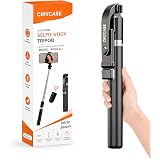
Upgraded 2026 67Inch/ 170cm Long Selfie Stick Tripod with Wireless Remote, Long Tripod Stand with 360° Rotation, Compatible with Mobile/GoPro for Travel,Suitable for iPhone and All Smartphones
₹499.00 (as of September 22, 2026 06:23 GMT +05:30 - More infoProduct prices and availability are accurate as of the date/time indicated and are subject to change. Any price and availability information displayed on [relevant Amazon Site(s), as applicable] at the time of purchase will apply to the purchase of this product.)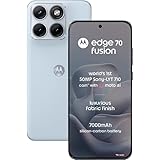
Motorola Edge 70 Fusion (Pantone Country Air, 8GB RAM, 128GB Storage) | 6.78" 1.5K 144Hz AMOLED Display | Snapdragon 7s Gen 4 | 50MP Sony LYTIA 710 OIS | 32MP Selfie | 7000mAh | 68W TurboPower |
₹29,699.00 (as of September 22, 2026 06:23 GMT +05:30 - More infoProduct prices and availability are accurate as of the date/time indicated and are subject to change. Any price and availability information displayed on [relevant Amazon Site(s), as applicable] at the time of purchase will apply to the purchase of this product.)
Portronics Konnect X 60W Unbreakable Nylon Braided Cable, 2M Fast Charging Cable For iPhone 15 Series, iPad, Samsung Galaxy (Black)
₹232.00 (as of September 22, 2026 06:23 GMT +05:30 - More infoProduct prices and availability are accurate as of the date/time indicated and are subject to change. Any price and availability information displayed on [relevant Amazon Site(s), as applicable] at the time of purchase will apply to the purchase of this product.)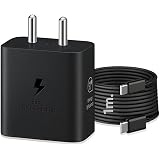
45W GaN Type C Super Fast Charger with Type-C Cable | Compatible with Samsung Galaxy S/A/M/F/Z Series,S26/S25/S24/S23/S22/S21/Fe/Plus/Ultra/Fold/Flip & More,BIS Certified Charger
₹579.00 (as of September 22, 2026 06:23 GMT +05:30 - More infoProduct prices and availability are accurate as of the date/time indicated and are subject to change. Any price and availability information displayed on [relevant Amazon Site(s), as applicable] at the time of purchase will apply to the purchase of this product.)
Samsung Original Type C to C Cable - 3.28 Feet (1 Meter), White
₹373.00 (as of September 22, 2026 06:23 GMT +05:30 - More infoProduct prices and availability are accurate as of the date/time indicated and are subject to change. Any price and availability information displayed on [relevant Amazon Site(s), as applicable] at the time of purchase will apply to the purchase of this product.)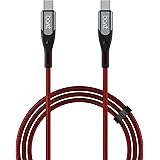
boAt Type C to C 65W Fast Charging Cable with 480 Mbps Data Transfer, Tangle-Free Cable in Premium Nylon Braided Design (Martian Red)
₹199.00 (as of September 22, 2026 06:23 GMT +05:30 - More infoProduct prices and availability are accurate as of the date/time indicated and are subject to change. Any price and availability information displayed on [relevant Amazon Site(s), as applicable] at the time of purchase will apply to the purchase of this product.)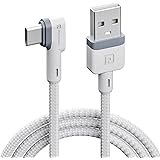
Portronics Konnect L POR-1403 Fast Charging 3A Type-C Cable 1.2 Meter with Charge & Sync Function for All Type-C Devices (White)
₹145.00 (as of September 22, 2026 06:23 GMT +05:30 - More infoProduct prices and availability are accurate as of the date/time indicated and are subject to change. Any price and availability information displayed on [relevant Amazon Site(s), as applicable] at the time of purchase will apply to the purchase of this product.)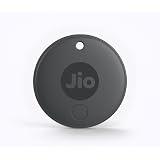
JioTag (2nd Generation) (Grey) - Android or iOS Compatible IP64 Rated Worldwide Item Finder for Keys, Wallets, Luggage, Gadgets and More |1+1 Year Battery | No SIM Needed
₹1,249.00 (as of September 22, 2026 06:23 GMT +05:30 - More infoProduct prices and availability are accurate as of the date/time indicated and are subject to change. Any price and availability information displayed on [relevant Amazon Site(s), as applicable] at the time of purchase will apply to the purchase of this product.)
The Cover Store Silicone Back Cover Case, Scratch Resistant Protective Crystal Clear Transparent Shock Proof Back Cover Case for Realme P1 Pro 5G / 12 Pro Plus / 12 Pro 5G
₹149.00 (as of September 22, 2026 06:23 GMT +05:30 - More infoProduct prices and availability are accurate as of the date/time indicated and are subject to change. Any price and availability information displayed on [relevant Amazon Site(s), as applicable] at the time of purchase will apply to the purchase of this product.)