

It usually starts as a small discomfort. An invisible heaviness behind the ribs, a faint sour taste creeping up the throat or that dull, ballooned feeling that makes you unbutton your jeans at the end of the day. For most of us, acidity and bloating are so routine that they’ve become background noise, never getting the attention that they should.
When lockdown first crept up on us, I blamed my recurring acidity on the food experimentation I partook in. But even on days I ate clean, the burn would return like clockwork around 11 pm, when my laptop light was the only one still on. Turns out, it wasn’t just the food. It was everything else.
“Acidity and bloating are almost always the result of disrupted rhythms,” explains Nicole Linhares Kedia, sports nutritionist and integrated health coach. “Overeating, excessive caffeine, poor sleep. All of these confuse the body’s internal clock.”
It’s a distinctly Indian storm, too. While acidity and bloating are universal, Kedia says she sees it far more here than overseas. “We’ve normalised irregularity. Late dinners, skipping breakfast, long commutes and constant stress. Combine that with our love for fried, spicy carbs and unwalkable cities and you’ve got the perfect storm.”
Even culturally, food is celebration, comfort and a lot of times, coping. But our plates have evolved faster than our lifestyles. The post-dinner walk has been replaced by screens and a ‘home-cooked’ meal by delivery apps. We’re a generation living in constant low-grade digestive distress.
The real culprit
A lot is going on beneath the surface that we need to educate ourselves on. Neha Ranglani, integrative nutritionist, points to a deeper, often-misunderstood root: low stomach acid.
“Most people assume acidity means too much acid. In reality, it’s often the opposite. When stomach acid is low, food doesn’t digest properly, it ferments. That creates gas, bloating and pressure, which pushes acid upward, causing reflux.”
Many of us pop antacids at the first sign of discomfort, unknowingly worsening the problem by neutralising what little acid we have left. A 2023 study published in the Indian Journal of Gastroenterology by Ghoshal et al. found a high prevalence of gastroesophageal reflux disease (GERD) among Indian adults and a growing dependence on antacids in urban populations.
Why women feel it more
“Hormonal fluctuations during PMS, pregnancy or menopause directly affect gut motility,” says Kedia. “The mental load of juggling work, home and emotional labour add up to a demographic that’s both chronically stressed and rarely on schedule.”
There’s also the quiet cultural layer. Indian women are often the last to sit down to eat, sometimes skipping meals or reheating leftovers after everyone else is done. “You can’t separate digestion from lifestyle,” Ranglani adds. “Stress, sleep, hydration, movement, they all play a role in how food moves through you.”
A case of the city stomach
If you live in an Indian city, you can probably picture it: an overworked stomach processing a late dinner of butter chicken at 10 pm, followed by two hours of scrolling under blue light, and a non-negotiable 7 am alarm. Your gut doesn’t get rest, it just negotiates survival.
Source link

OpenTech® Military-Grade Tempered Glass Screen Protector Compatible for iPhone 17 with Edge to Edge Coverage - Case Friendly, Anti-scratch and Bubble free installation kit (6.3 Inches)
₹291.98 (as of September 22, 2026 06:23 GMT +05:30 - More infoProduct prices and availability are accurate as of the date/time indicated and are subject to change. Any price and availability information displayed on [relevant Amazon Site(s), as applicable] at the time of purchase will apply to the purchase of this product.)
Pikkme OnePlus 10R 5G / 10R Prime 5G Back Cover Soft Matte Liquid Silicone TPU | Camera Protection | Shockproof Slim Back Case for OnePlus 10R 5G / 10R Prime 5G (Black)
₹199.00 (as of September 22, 2026 06:23 GMT +05:30 - More infoProduct prices and availability are accurate as of the date/time indicated and are subject to change. Any price and availability information displayed on [relevant Amazon Site(s), as applicable] at the time of purchase will apply to the purchase of this product.)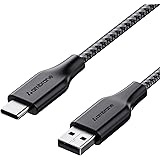
Ambrane Unbreakable 3A Fast Charging 1.5m Braided Type C Cable for Smartphones, Tablets & other Type C devices, 480Mbps Data Sync, Quick Charge 3.0 (RCT15A, Black)
₹179.00 (as of September 22, 2026 06:23 GMT +05:30 - More infoProduct prices and availability are accurate as of the date/time indicated and are subject to change. Any price and availability information displayed on [relevant Amazon Site(s), as applicable] at the time of purchase will apply to the purchase of this product.)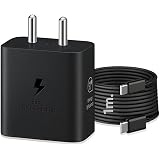
45W GaN Type C Super Fast Charger with Type-C Cable | Compatible with Samsung Galaxy S/A/M/F/Z Series,S26/S25/S24/S23/S22/S21/Fe/Plus/Ultra/Fold/Flip & More,BIS Certified Charger
₹579.00 (as of September 22, 2026 06:23 GMT +05:30 - More infoProduct prices and availability are accurate as of the date/time indicated and are subject to change. Any price and availability information displayed on [relevant Amazon Site(s), as applicable] at the time of purchase will apply to the purchase of this product.)
JETech Matte Case for iPhone 18 Pro, Dark Cherry | Frosted Translucent Back, Military Grade Drop Protection, Anti-Fingerprint, Anti-Slip Grip Cover
₹1,299.00 (as of September 22, 2026 06:23 GMT +05:30 - More infoProduct prices and availability are accurate as of the date/time indicated and are subject to change. Any price and availability information displayed on [relevant Amazon Site(s), as applicable] at the time of purchase will apply to the purchase of this product.)
Portronics Konnect X USB to Type C Cable with 3A Output, Fast Charging & Data Transfer, Nylon Braided, Aluminium Alloy Shell, 1M Length compatible with Type C Smartphones(White)
₹150.00 (as of September 22, 2026 06:23 GMT +05:30 - More infoProduct prices and availability are accurate as of the date/time indicated and are subject to change. Any price and availability information displayed on [relevant Amazon Site(s), as applicable] at the time of purchase will apply to the purchase of this product.)
Portronics Bridge Y USB 3.0 to Type C OTG Adaptor, 10Gbps High Speed Data Transfer, Thunderbolt to USB Adapter, Compatible for All Type C Devices, Smartphone, Laptops, Tablets, Chargers, MacBook
₹129.00 (as of September 22, 2026 06:23 GMT +05:30 - More infoProduct prices and availability are accurate as of the date/time indicated and are subject to change. Any price and availability information displayed on [relevant Amazon Site(s), as applicable] at the time of purchase will apply to the purchase of this product.)
Motorola Edge 70 Fusion (Pantone Country Air, 8GB RAM, 128GB Storage) | 6.78" 1.5K 144Hz AMOLED Display | Snapdragon 7s Gen 4 | 50MP Sony LYTIA 710 OIS | 32MP Selfie | 7000mAh | 68W TurboPower |
₹29,699.00 (as of September 22, 2026 06:23 GMT +05:30 - More infoProduct prices and availability are accurate as of the date/time indicated and are subject to change. Any price and availability information displayed on [relevant Amazon Site(s), as applicable] at the time of purchase will apply to the purchase of this product.)
DIZORO® Matte Case for iPhone 15 Compatible with MagSafe, Camera Lens Full Protection, Shockproof Translucent Frosted TPU Soft Phone Cover, Anti-Fingerprint (Blue)
₹298.00 (as of September 22, 2026 06:23 GMT +05:30 - More infoProduct prices and availability are accurate as of the date/time indicated and are subject to change. Any price and availability information displayed on [relevant Amazon Site(s), as applicable] at the time of purchase will apply to the purchase of this product.)