
While the mother-son duo firmly stands by their belief that one must “either be a jeweller or trust a jeweller,” they are happy to share the knowledge on how jewellery enthusiasts can set out building a great gemstone collection. The first thing to remember, they say, is that any iconic collection is not amassed overnight. It’s curated with patience, research and, most importantly, emotion. As the Shekhawats put it, “People who try to save a few rupees often end up paying more.”
Start with intent
Do you want to buy the stone to wear as part of your everyday jewellery? Or are you looking for an investment-grade asset? These are some of the questions that Sunita Shekhawat wants you to ask yourself before you approach your nearest jewellery store. “There are simulants in gemology. For example, a light blue, it can be aquamarine, which is expensive. It can be a blue topaz, which is not even 1/10th of the cost of aquamarine. The same goes for blue sapphire, tanzanite and blue topaz. So for someone whose priority is the colour, not the price, they can pick a gem based on appearance. But for someone who’s heavily into investment, of course, we should always start with the four main stones: ruby, emerald, sapphire and diamonds. These are the anchors of any good collection.”
Learn what makes your gemstones beautiful
Both Sunita and Digvijay place great importance on educating oneself about the science, or at least the basics, of the gems in a collection. Sunita emphasises clarity about hardness, wearability and structure. Knowing how your preferred gemstones perform on the Mohs Hardness Scale, a ranking to determine the stone’s scratch resistance, can make a world of difference when it comes to getting your jewellery designed. “For instance, emerald has limitations because its hardness is 7. Ruby’s hardness is 9 on the scale. You can’t cut an emerald to a custom shape but you can do that with rubies.” These distinctions matter, says Digvijay, as softer stones require more care and influence how they can be cut or set.
Build a balanced collection
Like all good things, your gemstone collection also needs balance. After you’ve acquired the four anchor gemstones, Digvijay suggests moving on to more “fun stones” like kunzite, tourmalines, citrine or amethyst. “Because they’re abundant, you can also experiment in terms of cuts, polish or facets in consultation with a skilled lapidary.” However, Sunita cautions that not all precious stones should be early purchases, instead suggesting restraint with high-stakes gems, such as the much rarer and more expensive Paraiba tourmalines. “I would not recommend purchasing it in the initial phases of building your collection. These acquisitions demand deeper research, higher risk tolerance and strong reason.”
Insist on provenance and sensible substitution
It goes without saying that gemstones are expensive. If you’re planning on splurging, then it’s best to do it with a trusted jeweller with experience. “If you’re looking for, say, a ruby, then you should always, always look for a certificate from a renowned lab,” says Digvijay. “Origin can also multiply value. If a ruby is from Mozambique and a similar quality ruby is from Burma, then that Burmese ruby will be two or three times more expensive than the Mozambique ruby because that origin is coveted. Documentation protects you when the price per carat becomes significant.” Equally, for style-first buyers, an experienced jeweller can offer honest substitutions that deliver identical colour impact at very different price points.
Breathe new life into old favourites
The best part about any jewellery collection is the story attached to the pieces that make them infinitely more valuable. Gemstone heirlooms, says Sunita, are particularly amenable to being redesigned. “A ring can be converted easily into a pendant. A pendant can easily be worn as a pocket pin,” says Sunita, “That’s the flexibility with gemstones. They can be combined with different metals or even enamel for a new look.”
Also read:
When it comes to wedding jewellery, why should women have all the fun?
Why is enamel jewellery having a moment?
I swore by minimalism until maximalist jewellery changed my mind
Source link

POP X (Flare White, 4GB+64GB) | 120Hz 6.74" Smooth Display| IP64 Protection & Drop Resistant | No Network Communication* | AI Active Noise Cancellation | AI Song Identification |AI Flash Snap| 5000mAh
₹8,499.00 (as of March 24, 2026 22:39 GMT +05:30 - More infoProduct prices and availability are accurate as of the date/time indicated and are subject to change. Any price and availability information displayed on [relevant Amazon Site(s), as applicable] at the time of purchase will apply to the purchase of this product.)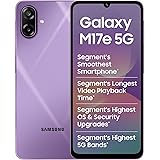
Samsung Galaxy M17e 5G Mobile (Vibe Violet, 6GB RAM, 128GB Storage) | Smoothest 120 Hz Refresh Rate| Monster 6000 mAh Battery | IP54 | 6 Gen OS Upgrades | AI | Gemini Live | Without Charger
₹13,499.00 (as of March 24, 2026 22:39 GMT +05:30 - More infoProduct prices and availability are accurate as of the date/time indicated and are subject to change. Any price and availability information displayed on [relevant Amazon Site(s), as applicable] at the time of purchase will apply to the purchase of this product.)
realme NARZO 90x 5G (Marine Blue,4GB+128GB) |7000mAh + 60W Biggest Battery & Fastest Charging in The Segment* | 144Hz Bright Display | Sony 50MP AI Rear Camera | AI Assist | 400% Ultra Boom Speaker
₹12,999.00 (as of March 24, 2026 22:39 GMT +05:30 - More infoProduct prices and availability are accurate as of the date/time indicated and are subject to change. Any price and availability information displayed on [relevant Amazon Site(s), as applicable] at the time of purchase will apply to the purchase of this product.)
Nokia 105 Classic | Single SIM Keypad Phone with Built-in UPI Payments, Long-Lasting Battery, Wireless FM Radio, Without Charger| 1 Year Replacement Guarantee | Charcoal
₹979.00 (as of March 24, 2026 22:39 GMT +05:30 - More infoProduct prices and availability are accurate as of the date/time indicated and are subject to change. Any price and availability information displayed on [relevant Amazon Site(s), as applicable] at the time of purchase will apply to the purchase of this product.)
Portronics Bridge Y USB 3.0 to Type C OTG Adaptor, 10Gbps High Speed Data Transfer, Thunderbolt to USB Adapter, Compatible for All Type C Devices, Smartphone, Laptops, Tablets, Chargers, MacBook
₹119.00 (as of March 24, 2026 22:39 GMT +05:30 - More infoProduct prices and availability are accurate as of the date/time indicated and are subject to change. Any price and availability information displayed on [relevant Amazon Site(s), as applicable] at the time of purchase will apply to the purchase of this product.)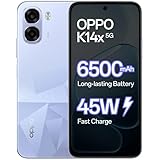
OPPO k14x 5g (Ice Blue) (4gb+128gb)
₹13,599.00 (as of March 24, 2026 22:39 GMT +05:30 - More infoProduct prices and availability are accurate as of the date/time indicated and are subject to change. Any price and availability information displayed on [relevant Amazon Site(s), as applicable] at the time of purchase will apply to the purchase of this product.)
YATWIN Silicone Back Case for Google Pixel 9A, Soft-Touch Phone Back Cover for Google Pixel 9A - Black
₹299.00 (as of March 24, 2026 22:39 GMT +05:30 - More infoProduct prices and availability are accurate as of the date/time indicated and are subject to change. Any price and availability information displayed on [relevant Amazon Site(s), as applicable] at the time of purchase will apply to the purchase of this product.)
APFEN® 27W Type C to Lightning Fast Charging Cable With High-Speed Data Transfer Compatible with iPhone 14/14 Pro/ 14 Pro Max/ 13/13 Pro/ 13 ProMax/ 12/11/XR/XS/X/8 S
₹272.00 (as of March 24, 2026 22:39 GMT +05:30 - More infoProduct prices and availability are accurate as of the date/time indicated and are subject to change. Any price and availability information displayed on [relevant Amazon Site(s), as applicable] at the time of purchase will apply to the purchase of this product.)
realme P4x 5G Smartphone, Lake Green, 6GB RAM, 128GB Storage
₹15,499.00 (as of March 24, 2026 22:39 GMT +05:30 - More infoProduct prices and availability are accurate as of the date/time indicated and are subject to change. Any price and availability information displayed on [relevant Amazon Site(s), as applicable] at the time of purchase will apply to the purchase of this product.)