
Often, when I talk to relatives or friends about healthy eating or a particular healthy eating habit, I hear the reply, “Why give up so many pleasures? Our fate depends on our genes anyway.” And while this is partly true, research teaches us that everyone’s eating habits and lifestyle largely influence the quality of our lives. One area of genetics, epigenetics, is concerned with studying how the environment around us, and especially our daily behaviour and habits (including eating habits), affect the expression of the genes we have inherited, encased in DNA. In other words, it reveals that we are not at the mercy of our genetic inheritance. We can take our destiny into our own hands by determining how our cells behave through our daily choices, whether physical activity, stress management, social relationships, exposure to pollution or nutrition, a crucial factor in gene expression.
How do we nourish ourselves to express our protective and longevity genes and “turn off” those related to inflammation? By adopting the epigenetic diet, a type of nutrition that helps express genes that reduce inflammation, slow ageing and reduce our biological age. This approach overlaps with what many know as a bold longevity diet, since the goal is to support long-term health through targeted foods. As explained by an authority on the subject: Dr Lucia Aronica, professor and researcher at Stanford University, a leading expert on epigenetics whose work has even appeared on Netflix.
How does nutrition affect our genes?
Food is not just calories: it’s code. Every bite we eat sends precise instructions to our genes, turning them on or off like molecular switches. This happens through epigenetics, chemical changes that sit “on top” of DNA (from the Greek “epi” = on top) and regulate its expression without changing its sequence. Think of your DNA as computer hardware. Epigenetics is the software, and what you eat reprogrammes it every day. Epinutrients in food, from broccoli to eggs, fish to green leafy vegetables, communicate with special enzymes that write or erase these epigenetic marks, just like editors reviewing a text. The most powerful message? We are not passive readers of our genetic code; we are active authors of our health story. While we cannot change the words (the genes), we can choose how we use them through daily choices that influence gene expression.
What is an epigenetic diet or nutrition?
I do not call it “epigenetic diet” (the name “diet” is often, though mistakenly, associated with “restriction”). I call it epinutrition, a practical approach I developed at Stanford to support gene expression through nutrition. Epinutrition is like a friendship between plant and animal foods, where each offers unique benefits. It is based on two basic categories of epinutrients, nutrients essential for the functioning of our epigenetic processes:
Methyl donors (such as folate, B12, choline and betaine): they provide the building blocks for epigenetic changes. We find them both in green leafy vegetables and in animal foods such as eggs, liver and fish.
Source link

realme NARZO 90x 5G (Nitro Blue,6GB+128GB) | 7000mAh + 60W Biggest Battery & Fastest Charging in The Segment* | 144Hz Bright Display | Sony 50MP AI Rear Camera | AI Assist | 400% Ultra Boom Speaker
₹15,499.00 (as of March 22, 2026 22:25 GMT +05:30 - More infoProduct prices and availability are accurate as of the date/time indicated and are subject to change. Any price and availability information displayed on [relevant Amazon Site(s), as applicable] at the time of purchase will apply to the purchase of this product.)
Portronics Konnect L POR-1403 Fast Charging 3A Type-C Cable 1.2 Meter with Charge & Sync Function for All Type-C Devices (White)
₹119.00 (as of March 22, 2026 22:25 GMT +05:30 - More infoProduct prices and availability are accurate as of the date/time indicated and are subject to change. Any price and availability information displayed on [relevant Amazon Site(s), as applicable] at the time of purchase will apply to the purchase of this product.)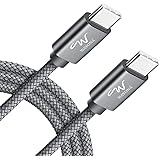
Wayona Type C to Type C 6FT/2M 65W Long Fast Charging Cable Compatible with iPhone 17, Air, iPhone 16,15 Pro/Max Series Macbook Air/Pro Samsung Galaxy S25, Ultra/S24/ S23 Flip Fold OnePlus (2M, Grey)
₹313.99 (as of March 22, 2026 22:25 GMT +05:30 - More infoProduct prices and availability are accurate as of the date/time indicated and are subject to change. Any price and availability information displayed on [relevant Amazon Site(s), as applicable] at the time of purchase will apply to the purchase of this product.)
OnePlus Pad Go 2 Stylo OPN2502 White in
₹3,999.00 (as of March 22, 2026 22:25 GMT +05:30 - More infoProduct prices and availability are accurate as of the date/time indicated and are subject to change. Any price and availability information displayed on [relevant Amazon Site(s), as applicable] at the time of purchase will apply to the purchase of this product.)
APFEN® 27W Type C to Lightning Fast Charging Cable With High-Speed Data Transfer Compatible with iPhone 14/14 Pro/ 14 Pro Max/ 13/13 Pro/ 13 ProMax/ 12/11/XR/XS/X/8 S
₹272.00 (as of March 22, 2026 22:25 GMT +05:30 - More infoProduct prices and availability are accurate as of the date/time indicated and are subject to change. Any price and availability information displayed on [relevant Amazon Site(s), as applicable] at the time of purchase will apply to the purchase of this product.)
Motorola G57 Power 5G (Corsair, 8GB RAM, 128GB Storage) | Snapdragon 6s Gen 4 Processor | 6.72" FHD+ Display | 50MP LYT-600 + 8MP Ultrawide | 8MP Selfie Camera | 7000mAh Battery, 33W TurboPower | IP64
₹14,866.00 (as of March 22, 2026 22:25 GMT +05:30 - More infoProduct prices and availability are accurate as of the date/time indicated and are subject to change. Any price and availability information displayed on [relevant Amazon Site(s), as applicable] at the time of purchase will apply to the purchase of this product.)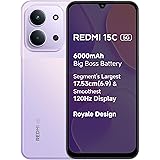
REDMI 15C 5G Dusk Purple 6GB + 128GB | Royale Design | Massive 6000mAh Battery | Segment's Largest 17.53cm Display Up to 120Hz | MediaTek Dimensity 6300 | 33W Fast Charging | 50MP AI Dual Camera
₹15,499.00 (as of March 22, 2026 22:25 GMT +05:30 - More infoProduct prices and availability are accurate as of the date/time indicated and are subject to change. Any price and availability information displayed on [relevant Amazon Site(s), as applicable] at the time of purchase will apply to the purchase of this product.)
Portronics Clamp M4 Car Phone Holder Stand with 360 Degree Rotation, Strong Grip, Suction Cup Mount, Single Hand Use, Shockproof Build, Mobile Stand for Car (Black)
₹247.00 (as of March 22, 2026 22:25 GMT +05:30 - More infoProduct prices and availability are accurate as of the date/time indicated and are subject to change. Any price and availability information displayed on [relevant Amazon Site(s), as applicable] at the time of purchase will apply to the purchase of this product.)
OnePlus Pad Go 2, 30.73 cm (12.1 inch) 2.8K Display, Dolby Vision™, 120Hz Refresh Rate, Quad Speakers, AI, 10050 mAh Battery, Wi-Fi Tablet, 8GB RAM 128 GB Storage, Shadow Black
₹26,999.00 (as of March 22, 2026 22:25 GMT +05:30 - More infoProduct prices and availability are accurate as of the date/time indicated and are subject to change. Any price and availability information displayed on [relevant Amazon Site(s), as applicable] at the time of purchase will apply to the purchase of this product.)