
Those imperfections—the therapist who pauses awkwardly, the missed cue, the flawed response—can be deeply therapeutic. “For anyone who grew up under pressure to be perfect, the realness of a human therapist can actually be corrective,” says Donahue.
For Gen Z, however, turning to tech is second nature. “They grew up with devices as a fifth limb,” says Alyssa Petersel, a licensed social worker and founder of MyWellbeing. The pandemic, too, trained this generation to rely on screens for connection. In that context, AI therapy doesn’t feel like a compromise—it feels intuitive.
But that intuition can be risky. Younger users are developmentally more vulnerable and more likely to trust confident responses, even when those responses come from a machine. In extreme cases, this has had tragic consequences. Two Texas families recently filed a lawsuit against Character.AI after their children’s interactions with AI chatbots led to devastating outcomes.
Even outside those extremes, there are concerns. “You’re losing the muscle to reflect and decide for yourself,” Petersel says. “AI therapy is persuasive, but not always contextual. And young people often don’t yet have the internal scaffolding to filter that.” Older adults, by contrast, often bring more scepticism to their interactions with tech.
That doesn’t mean AI is devoid of value. “We need to honour the benefits while understanding the risks,” says Pharaon. AI can rapidly synthesise documents, process journal entries and offer frameworks for reflection. Petersel offers a real-life example: uploading pages of stream-of-consciousness writing and asking the bot to summarise what she seems to believe.
But even the best AI therapy apps are only as good as the prompts they receive. Advice to “take a walk” or “call your dad” might seem supportive—unless your street is unsafe or your family dynamic is fraught. “The tech can’t always know what’s safe or emotionally appropriate,” says Petersel.
A recent study published in PLOS Mental Health found that people could rarely tell the difference between ChatGPT and human therapists, and often rated the AI responses higher. While that’s significant, it also raises questions about what kind of connection we’re measuring. “It’s not just about sounding smart,” says Donahue. “It’s about being seen.”
Ultimately, AI therapy might offer helpful tools, but it’s not a replacement for the messy, layered work of being in a relationship with another person. “AI shortchanges people from the beauty of growing through human connection,” says Donahue. “We need people. Period.”
Source link
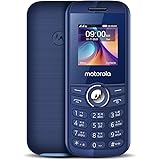
Motorola All-New A100 Single Sim keypad Phone | 2 Years Replacement | Long Lasting Battery | Loud Sound | Wireless FM | (Blue)
₹949.00 (as of March 26, 2026 22:52 GMT +05:30 - More infoProduct prices and availability are accurate as of the date/time indicated and are subject to change. Any price and availability information displayed on [relevant Amazon Site(s), as applicable] at the time of purchase will apply to the purchase of this product.)
Wayona Type C to Type C 6FT/2M 65W Long Fast Charging Cable Compatible with iPhone 17, Air, iPhone 16,15 Pro/Max Series Macbook Air/Pro Samsung Galaxy S25, Ultra/S24/ S23 Flip Fold OnePlus (2M, Grey)
₹313.99 (as of March 26, 2026 22:52 GMT +05:30 - More infoProduct prices and availability are accurate as of the date/time indicated and are subject to change. Any price and availability information displayed on [relevant Amazon Site(s), as applicable] at the time of purchase will apply to the purchase of this product.)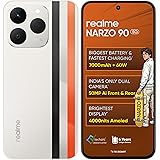
realme narzo 90 5G (Victory Gold,6GB+128GB) | 7000mAh Biggest Battery | 60W Fastest Charging | 50MP Front & Rear AI Cameras | 4000nits Brightest Display | AI Assist | IP69 Dust & Water Resistance
₹16,249.00 (as of March 26, 2026 22:52 GMT +05:30 - More infoProduct prices and availability are accurate as of the date/time indicated and are subject to change. Any price and availability information displayed on [relevant Amazon Site(s), as applicable] at the time of purchase will apply to the purchase of this product.)
Portronics Konnect X USB to Type C Cable with 3A Output, Fast Charging & Data Transfer, Nylon Braided, Aluminium Alloy Shell, 1M Length compatible with Type C Smartphones(Black)
₹129.00 (as of March 26, 2026 22:52 GMT +05:30 - More infoProduct prices and availability are accurate as of the date/time indicated and are subject to change. Any price and availability information displayed on [relevant Amazon Site(s), as applicable] at the time of purchase will apply to the purchase of this product.)
APFEN® 27W Type C to Lightning Fast Charging Cable With High-Speed Data Transfer Compatible with iPhone 14/14 Pro/ 14 Pro Max/ 13/13 Pro/ 13 ProMax/ 12/11/XR/XS/X/8 S
₹259.00 (as of March 26, 2026 22:52 GMT +05:30 - More infoProduct prices and availability are accurate as of the date/time indicated and are subject to change. Any price and availability information displayed on [relevant Amazon Site(s), as applicable] at the time of purchase will apply to the purchase of this product.)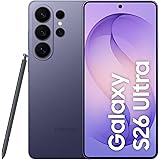
Samsung Galaxy S26 Ultra 5G (Cobalt Violet, 12GB RAM, 256GB Storage) with Built-in Privacy Display, AI Phone, Photo Assist, Creative Studio, 200MP Camera, 5000mAh Battery and Snapdragon 8 Elite Gen 5
₹1,39,999.00 (as of March 26, 2026 22:52 GMT +05:30 - More infoProduct prices and availability are accurate as of the date/time indicated and are subject to change. Any price and availability information displayed on [relevant Amazon Site(s), as applicable] at the time of purchase will apply to the purchase of this product.)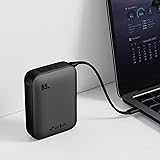
URBN 20000mAh 65W Smallest Rapid Charging Nano Power Bank with Inbuilt USB-C Cable | PD, QC & PPS Compatible | Dual Output Compact Power Bank for Laptop, Smartphone & Tablet
₹2,499.00 (as of March 26, 2026 22:52 GMT +05:30 - More infoProduct prices and availability are accurate as of the date/time indicated and are subject to change. Any price and availability information displayed on [relevant Amazon Site(s), as applicable] at the time of purchase will apply to the purchase of this product.)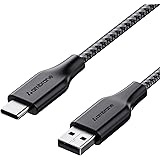
Ambrane Unbreakable 3A Fast Charging 1.5m Braided Type C Cable for Smartphones, Tablets & other Type C devices, 480Mbps Data Sync, Quick Charge 3.0 (RCT15A, Black)
₹149.00 (as of March 26, 2026 22:52 GMT +05:30 - More infoProduct prices and availability are accurate as of the date/time indicated and are subject to change. Any price and availability information displayed on [relevant Amazon Site(s), as applicable] at the time of purchase will apply to the purchase of this product.)
OnePlus Pad Go 2, 30.73 cm (12.1 inch) 2.8K Display, Dolby Vision™, 120Hz Refresh Rate, Quad Speakers, AI, 10050 mAh Battery, Wi-Fi Tablet, 8GB RAM 128 GB Storage, Shadow Black
₹26,999.00 (as of March 26, 2026 22:52 GMT +05:30 - More infoProduct prices and availability are accurate as of the date/time indicated and are subject to change. Any price and availability information displayed on [relevant Amazon Site(s), as applicable] at the time of purchase will apply to the purchase of this product.)