A spot can emerge for any number of reasons. One of those reasons might be a process known as skin purging, which refers to what happens when a new treatment or product ramps up cell turnover and thus rapidly brings underlying blemishes to the surface of the skin.
Whether you’re a skincare buff with an elaborate 10-step nighttime routine or a minimalist with a tightly edited roster of trusted products, determining the cause of the outbreak and the appropriate course of action to follow can be a minefield.
Here, we break down everything you need to know about skin purging, including its typical duration and how to treat it.
What is skin purging?
“Skin purging occurs when a product or treatment speeds up the skin’s cell turnover, leading to tiny open or closed comedones that usually manifest as whiteheads on the skin,” explains Dr Ifeoma Ejikeme. Active ingredients that work deep within the skin, like retinoids or azelaic acid, are often the culprits.
“It can look like a sudden wave of new blemishes or blocked pores as the skin clears house,” Dr Sam Bunting adds. “I like to call this acne turbulence. It’s an emotionally charged but often necessary phase on the path to clearer skin.”
What causes skin purging?
Dr Beibei Du-Harpur asserts that any product or treatment that speeds up cell turnover can do this, although most notably retinoids and exfoliants. Bunting agrees, explaining how “sleeping time bombs under the surface of your skin, the clogged pores destined to become breakouts, are triggered to emerge at once, rather than gradually over time”.
It’s often most noticeable in areas where you usually break out, because that’s where the underlying congestion sits. Dr Justine Hextall, La Roche-Posay consultant dermatologist, adds that applying products with strong active ingredients too frequently can cause significant purging.
How long does skin purging last?
“It can last from four days to six weeks, but on average, you can expect it to occur for around two weeks,” says Ejikeme. “It’s most intense if you’re prone to closed comedones, which are little, skin-coloured bumps under the surface,” Bunting adds. The good news is that once the skin has adjusted to your new routine, the flare settles, and you’ll start to see positive changes shortly after. Patience and consistency are key.
Is skin purging a good thing?
“Purging is neither good nor bad, and it can happen after using excellent products,” says Ejikeme. It can also happen if your skin barrier is compromised. “The risk of purging can be reduced if you first repair the barrier function, then slowly start the treatment or slowly introduce the product.”
Du-Harpur notes that while it’s not a fun experience, skin purging can, over time, “reflect the reduction of micro-comedones or acne precursors”, meaning your skin might be less acne-prone in the long run. Bunting agrees, noting that purging is “the skin’s way of resetting, uncomfortable in the short term, but often the gateway to long-term skin clarity”.
How does one distinguish skin purging from breakouts?
“Classic purging occurs only where you typically get breakouts, while irritation or new acne from an unsuitable product can appear anywhere, often as small, red, itchy bumps,” Bunting explains. If your skin feels sore, inflamed, or flaky all over, it’s more likely to be irritation or even a disrupted barrier, rather than purging. “Sometimes, both can happen together, which is why barrier support is crucial during this phase,” she says.
Kratos K9 Selfie Stick Tripod With Light, 67 inch /170CM Reinforced Tripod for Mobile Phone, Multi-Functional Bluetooth Long Selfie Stick for Travel,Vlogging,Compatible with iPhone and All Smartphones
₹609.00 (as of March 21, 2026 21:35 GMT +05:30 - More infoProduct prices and availability are accurate as of the date/time indicated and are subject to change. Any price and availability information displayed on [relevant Amazon Site(s), as applicable] at the time of purchase will apply to the purchase of this product.)
Motorola All-New A100 Single Sim keypad Phone | 2 Years Replacement | Long Lasting Battery | Loud Sound | Wireless FM | (Blue)
₹949.00 (as of March 21, 2026 21:35 GMT +05:30 - More infoProduct prices and availability are accurate as of the date/time indicated and are subject to change. Any price and availability information displayed on [relevant Amazon Site(s), as applicable] at the time of purchase will apply to the purchase of this product.)
Samsung Galaxy S26 Ultra 5G (Cobalt Violet, 12GB RAM, 256GB Storage) with Built-in Privacy Display, AI Phone, Photo Assist, Creative Studio, 200MP Camera, 5000mAh Battery and Snapdragon 8 Elite Gen 5
₹1,39,999.00 (as of March 21, 2026 21:35 GMT +05:30 - More infoProduct prices and availability are accurate as of the date/time indicated and are subject to change. Any price and availability information displayed on [relevant Amazon Site(s), as applicable] at the time of purchase will apply to the purchase of this product.)
Portronics Bridge Y USB 3.0 to Type C OTG Adaptor, 10Gbps High Speed Data Transfer, Thunderbolt to USB Adapter, Compatible for All Type C Devices, Smartphone, Laptops, Tablets, Chargers, MacBook
₹119.00 (as of March 21, 2026 21:35 GMT +05:30 - More infoProduct prices and availability are accurate as of the date/time indicated and are subject to change. Any price and availability information displayed on [relevant Amazon Site(s), as applicable] at the time of purchase will apply to the purchase of this product.)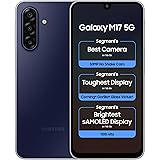
Samsung Galaxy M17 5G Mobile (Sapphire Black, 6GB RAM, 128GB Storage) | 50MP OIS Triple Camera | Gorilla Glass Victus | IP54 | 6 Gen OS Upgrades | AI | Gemini Live | Lag-Free Gaming | Without Charger
₹15,499.00 (as of March 21, 2026 21:35 GMT +05:30 - More infoProduct prices and availability are accurate as of the date/time indicated and are subject to change. Any price and availability information displayed on [relevant Amazon Site(s), as applicable] at the time of purchase will apply to the purchase of this product.)
TheGiftKart Ultra-Hybrid Crystal Clear Back Case Cover for iPhone 17 | Shockproof Design | Hard Back Cover Case for iPhone 17 (PC & TPU, Transparent)
₹277.00 (as of March 21, 2026 21:35 GMT +05:30 - More infoProduct prices and availability are accurate as of the date/time indicated and are subject to change. Any price and availability information displayed on [relevant Amazon Site(s), as applicable] at the time of purchase will apply to the purchase of this product.)
realme NARZO 80 Lite 5G (Onyx Black, 4GB+128GB) | 6000mAh Long-Lasting Battery | MediaTek Dimensity 6300 5G | AI Assist | IP64 Rated Water & Dust Resistance | Military-Grade Durability
Now retrieving the price.
(as of March 21, 2026 21:35 GMT +05:30 - More infoProduct prices and availability are accurate as of the date/time indicated and are subject to change. Any price and availability information displayed on [relevant Amazon Site(s), as applicable] at the time of purchase will apply to the purchase of this product.)
APFEN® Type C to Lightning [MFi Certified] Fast Charging Cable Compatible with iPhone 14/14 Pro/ 14 Pro Max/ 13/13 Pro/ 13 Pro Max/ 12/11/XR/XS/X/8 S
₹272.00 (as of March 21, 2026 21:35 GMT +05:30 - More infoProduct prices and availability are accurate as of the date/time indicated and are subject to change. Any price and availability information displayed on [relevant Amazon Site(s), as applicable] at the time of purchase will apply to the purchase of this product.)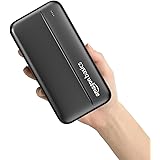
Amazon Basics 20000 mAh Power Bank | 22.5W Fast Charging | Dual Output & Input | Charge 3 Devices Simultaneously | for Smartphones, TWS Earbuds, Speakers, Tablets (Black)
₹899.00 (as of March 21, 2026 21:35 GMT +05:30 - More infoProduct prices and availability are accurate as of the date/time indicated and are subject to change. Any price and availability information displayed on [relevant Amazon Site(s), as applicable] at the time of purchase will apply to the purchase of this product.)