Over the next two years, I travelled between India and Pakistan in search of more antique bridal wear. I began in Mumbai, continued to Delhi, and then onwards to Lahore.
The more I looked, the deeper my fascination grew—not just with the dresses but with the history they carried of both the owners who had commissioned them and the kaarigars who created them. These garments were traces of a time, place, and community now scattered across the South Asian subcontinent.
Many from the initial Dongri set of bridal outfits came from families who had migrated from Northern India to Mumbai in search of economic prospects, and the humidity of the city made it nearly impossible to preserve these delicate pieces, causing the zari to tarnish and the silk to give way. Migrants who had moved from Northern India to Karachi, similarly, found their sherwani and karakulis unfit for the climate of their new home. Finding little use for them, they were often discarded or sold. In a way, the dresses mirrored the impact of migration itself: once part of a cohesive whole, these treasured pieces were now fragmented and fading. In every city, each conversation I had with a shopkeeper—anecdotal, winding, and often over cups of chai—offered another thread to pull.
Later, in Lahore, I began to understand the deeper connections these garments had to the history of Partition—which was, at the time, the largest migration in human history, with an estimated 16 million people crossing what is now the Indo-Pak border. Before Partition, the greatest kharkhaanas in North India were found where feudal wealth was concentrated: Awadh, Punjab, and Delhi. The landed class and elites of these cities served as patrons to a largely Muslim workforce that populated these ateliers. When Partition occurred, India experienced a migration of both Muslim patrons and Muslim artisans. The craftsmen who remained make up most of the embroidery workforce in India today.
I stumbled upon old zari buyers in the Anarkali bazaar of old Lahore, just like I did in Mumbai, walking in the opposite direction of rush hour traffic, quite far from where I had intended to be. There, the shopkeepers told me slightly different stories of the dresses: that they had been brought over from India both pre and post-Partition and that people had sold them for the same reason—out of financial hardship in a newfound home.
Source link

TheGiftKart Ultra-Hybrid Crystal Clear Back Case Cover for iPhone 17 | Shockproof Design | Hard Back Cover Case for iPhone 17 (PC & TPU, Transparent)
₹277.00 (as of March 25, 2026 22:48 GMT +05:30 - More infoProduct prices and availability are accurate as of the date/time indicated and are subject to change. Any price and availability information displayed on [relevant Amazon Site(s), as applicable] at the time of purchase will apply to the purchase of this product.)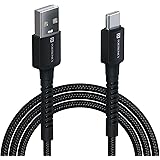
Portronics Konnect X USB to Type C Cable with 3A Output, Fast Charging & Data Transfer, Nylon Braided, Aluminium Alloy Shell, 1M Length compatible with Type C Smartphones(Black)
₹129.00 (as of March 25, 2026 22:48 GMT +05:30 - More infoProduct prices and availability are accurate as of the date/time indicated and are subject to change. Any price and availability information displayed on [relevant Amazon Site(s), as applicable] at the time of purchase will apply to the purchase of this product.)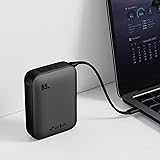
URBN 20000mAh 65W Smallest Rapid Charging Nano Power Bank with Inbuilt USB-C Cable | PD, QC & PPS Compatible | Dual Output Compact Power Bank for Laptop, Smartphone & Tablet
₹2,499.00 (as of March 25, 2026 22:48 GMT +05:30 - More infoProduct prices and availability are accurate as of the date/time indicated and are subject to change. Any price and availability information displayed on [relevant Amazon Site(s), as applicable] at the time of purchase will apply to the purchase of this product.)
Portronics Bridge Y USB 3.0 to Type C OTG Adaptor, 10Gbps High Speed Data Transfer, Thunderbolt to USB Adapter, Compatible for All Type C Devices, Smartphone, Laptops, Tablets, Chargers, MacBook
₹109.00 (as of March 25, 2026 22:48 GMT +05:30 - More infoProduct prices and availability are accurate as of the date/time indicated and are subject to change. Any price and availability information displayed on [relevant Amazon Site(s), as applicable] at the time of purchase will apply to the purchase of this product.)
OnePlus Nord CE5 | MediaTek Dimensity | Massive 7100mAh Battery | Powered by OnePlus AI | 128GB 8GB | Black Infinity
₹24,996.00 (as of March 25, 2026 22:48 GMT +05:30 - More infoProduct prices and availability are accurate as of the date/time indicated and are subject to change. Any price and availability information displayed on [relevant Amazon Site(s), as applicable] at the time of purchase will apply to the purchase of this product.)
Erams Online for iPhone 13 |Convert to 17 pro /17 Pro Max Style Premium Back Glass Converter Cover Magnetic Case for iPhone 13 |Convert to 17 pro /17 Pro Max (Orange)
₹439.00 (as of March 25, 2026 22:48 GMT +05:30 - More infoProduct prices and availability are accurate as of the date/time indicated and are subject to change. Any price and availability information displayed on [relevant Amazon Site(s), as applicable] at the time of purchase will apply to the purchase of this product.)
OnePlus 15R | 12GB+256GB | Charcoal Black | World's First Snapdragon® 8 Gen 5 | 7400mAh Battery | Personalised AI | Game-Changing 165Hz Display | IP68 IP69 IP66 & IP69K | 4K 120fps Video
₹47,997.00 (as of March 25, 2026 22:48 GMT +05:30 - More infoProduct prices and availability are accurate as of the date/time indicated and are subject to change. Any price and availability information displayed on [relevant Amazon Site(s), as applicable] at the time of purchase will apply to the purchase of this product.)
iPhone 17e 256 GB: 15.40 cm (6.1″) Super Retina XDR Display, A19 Chip, All-Day Battery Life, 48MP Fusion Camera, 256GB Starting Storage; White
Now retrieving the price.
(as of March 25, 2026 22:48 GMT +05:30 - More infoProduct prices and availability are accurate as of the date/time indicated and are subject to change. Any price and availability information displayed on [relevant Amazon Site(s), as applicable] at the time of purchase will apply to the purchase of this product.)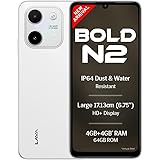
Lava Bold N2 (Siachen White, 4 GB RAM, 64 GB Storage) | 13MP AI Dual Rear Camera | Largest 6.75" HD+ Display | 5000 mAh Battery & 10W Charging | IP64 Water & Dust Proof | Charger & Phone-Case in Box
₹7,999.00 (as of March 25, 2026 22:48 GMT +05:30 - More infoProduct prices and availability are accurate as of the date/time indicated and are subject to change. Any price and availability information displayed on [relevant Amazon Site(s), as applicable] at the time of purchase will apply to the purchase of this product.)