
It’s 2am. I’m wide awake, attached to a breast pump, preparing for my toddler’s next feed. I could tackle the dirty dishes downstairs or prepare tomorrow’s breakfast. Instead, I scroll Instagram bleary-eyed, seeking momentary escape. Throughout my transition into motherhood, guilt has been my constant companion as I try to bounce back to my pre-pregnancy figure or make a dent in my to-do list. They say it takes a village, but delegating has always been my weakness. This struggle to relinquish control isn’t mine alone, but common among working mothers in India, who are often raised with the expectation of handling everything without complaint or assistance.
In Saumya Dave’s recently published novel The Guilt Pill, protagonist Maya Patel faces postpartum challenges similar to my own. As both a new mother and CEO, Maya wants to do it all in her personal and professional life. Even with a husband, family and colleagues eager to help, she doesn’t know how to take a break. The cultural imperative runs too deep. According to board-certified psychiatrist and author Dr. Sue Varma, “society has groomed women of colour to internalise the idea that self-reliance and over-functioning are markers of strength. In South Asian cultures, where family reputation is key, women are expected to fulfil multiple roles to perfection.”
Indian women are culturally conditioned to be grateful instead of asking for help. Anything less than absolute gratitude could risk judgment from society or extended family. Even in the workforce, juggling motherhood and professional obligations comes at a cost. According to Aon’s 2024 Voice of Women Study, 75% of working mothers reported career setbacks of one to two years after maternity leave. A costly price to pay in a culture that prefers hiring younger, cheaper talent and rewards those who constantly upskill.
Asking for help starts at home
For Gauri Agarwal, founder of Sihori, a craft brand that creates opportunities for artisanal women, delegation became less of a professional strategy and more of a personal lifeline. Growing up in Muzaffarnagar in Uttar Pradesh, Agarwal witnessed generations of women, including her own mother, living in financial dependence. The challenges that came with asking for help after breaking that generational cycle were another story. “I’m not sure if struggling with assigning tasks to others is an Indian thing, a woman thing or a ‘me’ thing, but I’ve always put immense pressure on myself to make everything my responsibility,” Agarwal admits. The friction in her marriage, coupled with postpartum depression and constant work travel, became a turning point. “How could I empower other women at work if I couldn’t help myself first?” Delegation was no longer an option for Agarwal, but a necessity.
Source link

XIAOMI Pad 8 Creator's Edition with Focus Pen Pro | Flagship Snapdragon 8s Gen 4 |11.2" 3.2K | 12GB, 256GB | Ultra Slim Metal Design | 9200mAh Battery HyperAI | Wi-Fi 7 | Graphite Grey
Now retrieving the price.
(as of March 22, 2026 22:25 GMT +05:30 - More infoProduct prices and availability are accurate as of the date/time indicated and are subject to change. Any price and availability information displayed on [relevant Amazon Site(s), as applicable] at the time of purchase will apply to the purchase of this product.)
Motorola G57 Power 5G (Corsair, 8GB RAM, 128GB Storage) | Snapdragon 6s Gen 4 Processor | 6.72" FHD+ Display | 50MP LYT-600 + 8MP Ultrawide | 8MP Selfie Camera | 7000mAh Battery, 33W TurboPower | IP64
₹14,866.00 (as of March 22, 2026 22:25 GMT +05:30 - More infoProduct prices and availability are accurate as of the date/time indicated and are subject to change. Any price and availability information displayed on [relevant Amazon Site(s), as applicable] at the time of purchase will apply to the purchase of this product.)
TheGiftKart Ultra-Hybrid Crystal Clear Back Case Cover for iPhone 17 | Shockproof Design | Hard Back Cover Case for iPhone 17 (PC & TPU, Transparent)
₹277.00 (as of March 22, 2026 22:25 GMT +05:30 - More infoProduct prices and availability are accurate as of the date/time indicated and are subject to change. Any price and availability information displayed on [relevant Amazon Site(s), as applicable] at the time of purchase will apply to the purchase of this product.)
iQOO Neo 10R 5G (Moonknight Titanium, 8GB RAM, 256GB Storage) | Snapdragon 8s Gen 3 Processor | India's Slimmest 6400mAh Battery Smartphone | Segment's Most Stable 90FPS for 5 Hours
₹28,998.00 (as of March 22, 2026 22:25 GMT +05:30 - More infoProduct prices and availability are accurate as of the date/time indicated and are subject to change. Any price and availability information displayed on [relevant Amazon Site(s), as applicable] at the time of purchase will apply to the purchase of this product.)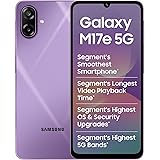
Samsung Galaxy M17e 5G Mobile (Vibe Violet, 6GB RAM, 128GB Storage) | Smoothest 120 Hz Refresh Rate| Monster 6000 mAh Battery | IP54 | 6 Gen OS Upgrades | AI | Gemini Live | Without Charger
₹13,499.00 (as of March 22, 2026 22:25 GMT +05:30 - More infoProduct prices and availability are accurate as of the date/time indicated and are subject to change. Any price and availability information displayed on [relevant Amazon Site(s), as applicable] at the time of purchase will apply to the purchase of this product.)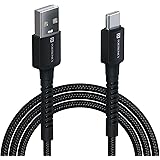
Portronics Konnect X USB to Type C Cable with 3A Output, Fast Charging & Data Transfer, Nylon Braided, Aluminium Alloy Shell, 1M Length compatible with Type C Smartphones(Black)
₹129.00 (as of March 22, 2026 22:25 GMT +05:30 - More infoProduct prices and availability are accurate as of the date/time indicated and are subject to change. Any price and availability information displayed on [relevant Amazon Site(s), as applicable] at the time of purchase will apply to the purchase of this product.)
OnePlus Pad Go 2 Stylo OPN2502 White in
₹3,999.00 (as of March 22, 2026 22:25 GMT +05:30 - More infoProduct prices and availability are accurate as of the date/time indicated and are subject to change. Any price and availability information displayed on [relevant Amazon Site(s), as applicable] at the time of purchase will apply to the purchase of this product.)
Samsung Galaxy M17 5G Mobile (Sapphire Black, 6GB RAM, 128GB Storage) | 50MP OIS Triple Camera | Gorilla Glass Victus | IP54 | 6 Gen OS Upgrades | AI | Gemini Live | Lag-Free Gaming | Without Charger
₹15,499.00 (as of March 22, 2026 22:25 GMT +05:30 - More infoProduct prices and availability are accurate as of the date/time indicated and are subject to change. Any price and availability information displayed on [relevant Amazon Site(s), as applicable] at the time of purchase will apply to the purchase of this product.)
iQOO Z11x 5G (Prismatic Green, 8GB RAM, 256 GB Storage) | Dimensity 7400-Turbo Processor | 7200 mAh Battery Smartphone | Powered by OriginOS 6
₹22,998.00 (as of March 22, 2026 22:25 GMT +05:30 - More infoProduct prices and availability are accurate as of the date/time indicated and are subject to change. Any price and availability information displayed on [relevant Amazon Site(s), as applicable] at the time of purchase will apply to the purchase of this product.)