Chapped lips, cracked heels, burnt skin or a broken heart; as a Bengali millennial, I’m convinced that there’s nothing Boroline can’t heal. And this isn’t only nostalgia or the ‘Bengalis know better’ syndrome talking, but tried-and-tested experiences.
I’ve always had a stash of Boroline tubes tucked away, hoarded from every trip to Kolkata, handed out to friends like souvenirs. But it wasn’t until recently that I realised just how powerful that green tube really is.
One morning, I looked in the mirror and let out a small horror-movie scream. My face was covered in a rough rash, something between an allergic reaction and a hex. Usually, my darker skin tone camouflages breakouts, but this was beyond the scope of the melanin gods.
In a panic, I reached for the only thing that came to mind: Boroline.
I applied it twice a day for two days. By the end of it, the redness had faded, the itchiness had settled and the sun shone on my blemish-free skin again. It was the kind of moment that confirms what you already suspect: there truly is nothing Boroline can’t heal (at least for the Bengali).
After years of cycling through moisturisers to pacify my combination skin, Boroline is now the staple in my skincare routine.
How does one categorise Boroline? An antiseptic cream? A moisturiser? A healing balm? A generational ritual captured in a tube? Even designer Sabyasachi Mukherjee waxed poetic about it on Instagram. Boroline smells sweet, like childhood. The comforting fragrance brings back memories of our grandmothers’ beauty shelves, where talcum powder and that unmistakable green tube sat side by side. I can’t say when I adopted the habit myself, but at some point it became second nature. Boroline is now my daily moisturiser, with tubes stashed in drawers, handbags and bathroom shelves—you know, just in case.
Boroline was first launched in 1929 by Bengali merchant Gaur Mohun Dutta, as part of the pre-independence Swadeshi movement. In a mildly ethnocentric way, it became a product by Bengalis for other Bengalis, marketed during Durga Pujo and became Dutta’s pride and joy. As per their website, wartime shortages led to changes in packaging, but the company printed a note on every pack reassuring customers that the quality remained unchanged. When India became independent, one lakh tubes were distributed as a celebration, solidifying its commitment to being for and of India.
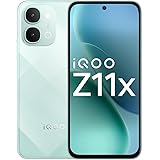
iQOO Z11x 5G (Prismatic Green, 8GB RAM, 256 GB Storage) | Dimensity 7400-Turbo Processor | 7200 mAh Battery Smartphone | Powered by OriginOS 6
₹22,998.00 (as of March 26, 2026 22:52 GMT +05:30 - More infoProduct prices and availability are accurate as of the date/time indicated and are subject to change. Any price and availability information displayed on [relevant Amazon Site(s), as applicable] at the time of purchase will apply to the purchase of this product.)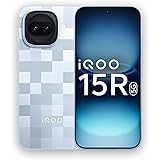
iQOO 15R (Triumph Silver, 12GB RAM, 256GB Storage) | Snapdragon® 8 Gen 5 Processor | India’s Slimmest Smartphone in 7600mAh Battery* | Segment's Most Stable 144FPS Gaming*
₹47,998.00 (as of March 26, 2026 22:52 GMT +05:30 - More infoProduct prices and availability are accurate as of the date/time indicated and are subject to change. Any price and availability information displayed on [relevant Amazon Site(s), as applicable] at the time of purchase will apply to the purchase of this product.)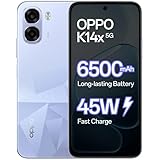
OPPO k14x 5g (Ice Blue) (4gb+128gb)
₹13,600.00 (as of March 26, 2026 22:52 GMT +05:30 - More infoProduct prices and availability are accurate as of the date/time indicated and are subject to change. Any price and availability information displayed on [relevant Amazon Site(s), as applicable] at the time of purchase will apply to the purchase of this product.)
Samsung Original 25W USB Type-C Travel Adaptor Without Cable for Google Pixel, Xiaomi, Motorola, iPhone, Samsung Galaxy Tab S/A Series, Galaxy S10/M54/M55/A80/A90/S25/S24, White
₹785.00 (as of March 26, 2026 22:52 GMT +05:30 - More infoProduct prices and availability are accurate as of the date/time indicated and are subject to change. Any price and availability information displayed on [relevant Amazon Site(s), as applicable] at the time of purchase will apply to the purchase of this product.)
iQOO Z10 Lite 5G (Cyber Green, 4GB RAM, 64GB Storage) | 6000 mAh Battery | Dimensity 6300 5G Processor with 433K+* AnTuTu Score | IP64 Rated & Military Grade Shock-Resistance*
₹12,999.00 (as of March 26, 2026 22:52 GMT +05:30 - More infoProduct prices and availability are accurate as of the date/time indicated and are subject to change. Any price and availability information displayed on [relevant Amazon Site(s), as applicable] at the time of purchase will apply to the purchase of this product.)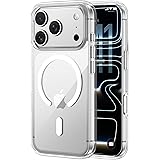
Kratos Transparent Clear Case Cover Compatible with iPhone 17 Pro - Anti-Yellowing, Wireless Magnetic Charging Case with Raised Edge Camera & Screen Protection, Shock-Resistant Design
₹299.00 (as of March 26, 2026 22:52 GMT +05:30 - More infoProduct prices and availability are accurate as of the date/time indicated and are subject to change. Any price and availability information displayed on [relevant Amazon Site(s), as applicable] at the time of purchase will apply to the purchase of this product.)
POP X (Flare White, 4GB+64GB) | 120Hz 6.74" Smooth Display| IP64 Protection & Drop Resistant | No Network Communication* | AI Active Noise Cancellation | AI Song Identification |AI Flash Snap| 5000mAh
₹8,499.00 (as of March 26, 2026 22:52 GMT +05:30 - More infoProduct prices and availability are accurate as of the date/time indicated and are subject to change. Any price and availability information displayed on [relevant Amazon Site(s), as applicable] at the time of purchase will apply to the purchase of this product.)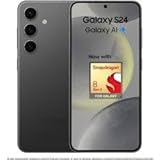
Samsung Galaxy S24 Snapdragon 5G (Onyx Black, 256 GB) (8 GB RAM)
₹49,249.00 (as of March 26, 2026 22:52 GMT +05:30 - More infoProduct prices and availability are accurate as of the date/time indicated and are subject to change. Any price and availability information displayed on [relevant Amazon Site(s), as applicable] at the time of purchase will apply to the purchase of this product.)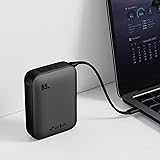
URBN 20000mAh 65W Smallest Rapid Charging Nano Power Bank with Inbuilt USB-C Cable | PD, QC & PPS Compatible | Dual Output Compact Power Bank for Laptop, Smartphone & Tablet
₹2,499.00 (as of March 26, 2026 22:52 GMT +05:30 - More infoProduct prices and availability are accurate as of the date/time indicated and are subject to change. Any price and availability information displayed on [relevant Amazon Site(s), as applicable] at the time of purchase will apply to the purchase of this product.)