
Yogini Jingan, an associate manager at Nykaa, didn’t expect her skincare routine to unravel when she moved from Delhi to Mumbai. But within weeks, her cult-favourite products turned on her. Serums that felt weightless in Delhi’s dry air had become sticky and suffocating in Mumbai’s humidity. Her skincare isn’t working, and not because she changed it. “It’s like my entire shelf betrayed me,” she says, half amused, half exasperated.
This isn’t just personal inconvenience. It’s a symptom of a larger flaw in Indian beauty: the refusal to acknowledge that India isn’t one market. The same product can act like a miracle in one city and a mistake in another, depending on the climate. However, the majority of brands continue to develop with a pan-Indian perspective, overlooking the importance of microclimates in favour of mass appeal.
The problem isn’t just technical; it’s also ideological. Brands build for the idea of India, not the lived reality of its people. They prioritise scalability over specificity. Tamil skin, Assamese hair, the water hardness in Bengaluru—these aren’t outliers. They’re reflections of our reality.
“You can’t formulate for Indian skin without first defining what Indian skin actually is,” says cosmetic scientist and product innovation consultant, Lipika Hegde. For instance, in a country with such a spectrum of skin tones, actives don’t behave uniformly. Melanin-rich skin is more prone to pigmentation, while lighter tones often show redness or irritation. These biological differences directly affect how ingredients perform yet most brands don’t test for them. So when consumers feel their skincare isn’t working, it is often because formulas are borrowed from Western benchmarks and applied wholesale in India. Hegde raises a critical question: “Can Indian brands, often operating with strapped capital, invest in something this niche? ”
But what if the real opportunity lies in embracing that niche?
Some brands are starting to listen. In Coimbatore, Vilvah has grown into a ₹100 crore brand by staying rooted. Founder Kruthika Kumaran didn’t rush to go national. She focused on Tamil Nadu first, testing products across water types, rejecting trends that didn’t translate and building loyalty through relevance. Dewy sunscreen? Not a thing. “People here don’t want shine; they want something that feels fresh and clean,” she says. “We didn’t follow trends. We asked what works here.” Even now, she insists there’s untapped potential in Tamil Nadu alone.
Source link
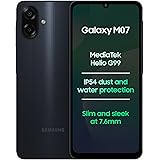
Samsung Galaxy M07 Mobile (Black, 4GB RAM, 64GB Storage) | MediaTek Helio G99 | AnTuTu 624K | IP54| 50MP Camera | 7.6mm Slim | 5000mAh Battery | 25W Fast Charging | 6 Gen OS Upgrades | Without Charger
₹7,999.00 (as of March 22, 2026 22:25 GMT +05:30 - More infoProduct prices and availability are accurate as of the date/time indicated and are subject to change. Any price and availability information displayed on [relevant Amazon Site(s), as applicable] at the time of purchase will apply to the purchase of this product.)
XIAOMI Pad 8 Creator's Edition with Focus Pen Pro | Flagship Snapdragon 8s Gen 4 |11.2" 3.2K | 12GB, 256GB | Ultra Slim Metal Design | 9200mAh Battery HyperAI | Wi-Fi 7 | Graphite Grey
Now retrieving the price.
(as of March 22, 2026 22:25 GMT +05:30 - More infoProduct prices and availability are accurate as of the date/time indicated and are subject to change. Any price and availability information displayed on [relevant Amazon Site(s), as applicable] at the time of purchase will apply to the purchase of this product.)
OpenTech® Privacy Military-Grade Gorilla Tempered Glass Screen Protector for Samsung Galaxy S24 Ultra with Edge to Edge Coverage - Case Friendly, Anti-scratch and Bubble free installation kit
₹299.00 (as of March 22, 2026 22:25 GMT +05:30 - More infoProduct prices and availability are accurate as of the date/time indicated and are subject to change. Any price and availability information displayed on [relevant Amazon Site(s), as applicable] at the time of purchase will apply to the purchase of this product.)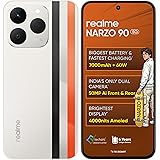
realme narzo 90 5G (Victory Gold,6GB+128GB) | 7000mAh Biggest Battery | 60W Fastest Charging | 50MP Front & Rear AI Cameras | 4000nits Brightest Display | AI Assist | IP69 Dust & Water Resistance
₹16,999.00 (as of March 22, 2026 22:25 GMT +05:30 - More infoProduct prices and availability are accurate as of the date/time indicated and are subject to change. Any price and availability information displayed on [relevant Amazon Site(s), as applicable] at the time of purchase will apply to the purchase of this product.)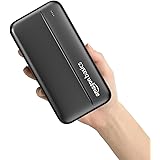
Amazon Basics 20000 mAh Power Bank | 22.5W Fast Charging | Dual Output & Input | Charge 3 Devices Simultaneously | for Smartphones, TWS Earbuds, Speakers, Tablets (Black)
₹899.00 (as of March 22, 2026 22:25 GMT +05:30 - More infoProduct prices and availability are accurate as of the date/time indicated and are subject to change. Any price and availability information displayed on [relevant Amazon Site(s), as applicable] at the time of purchase will apply to the purchase of this product.)
OnePlus Pad Go 2 Stylo OPN2502 White in
₹3,999.00 (as of March 22, 2026 22:25 GMT +05:30 - More infoProduct prices and availability are accurate as of the date/time indicated and are subject to change. Any price and availability information displayed on [relevant Amazon Site(s), as applicable] at the time of purchase will apply to the purchase of this product.)
Nokia All-new 105 Single Sim Keypad Phone with Built-in UPI Payments, Long-Lasting Battery, Wireless FM Radio| 1 Year Replacement Guarantee | Charcoal
₹1,199.00 (as of March 22, 2026 22:25 GMT +05:30 - More infoProduct prices and availability are accurate as of the date/time indicated and are subject to change. Any price and availability information displayed on [relevant Amazon Site(s), as applicable] at the time of purchase will apply to the purchase of this product.)
Samsung Original 25W USB Type-C Travel Adaptor Without Cable for Google Pixel, Xiaomi, Motorola, iPhone, Samsung Galaxy Tab S/A Series, Galaxy S10/M54/M55/A80/A90/S25/S24, White
₹759.00 (as of March 22, 2026 22:25 GMT +05:30 - More infoProduct prices and availability are accurate as of the date/time indicated and are subject to change. Any price and availability information displayed on [relevant Amazon Site(s), as applicable] at the time of purchase will apply to the purchase of this product.)
TheGiftKart Ultra-Hybrid Crystal Clear Back Case Cover for iPhone 17 | Shockproof Design | Hard Back Cover Case for iPhone 17 (PC & TPU, Transparent)
₹277.00 (as of March 22, 2026 22:25 GMT +05:30 - More infoProduct prices and availability are accurate as of the date/time indicated and are subject to change. Any price and availability information displayed on [relevant Amazon Site(s), as applicable] at the time of purchase will apply to the purchase of this product.)